

By Safal Editorial Team
Deep Cleaning
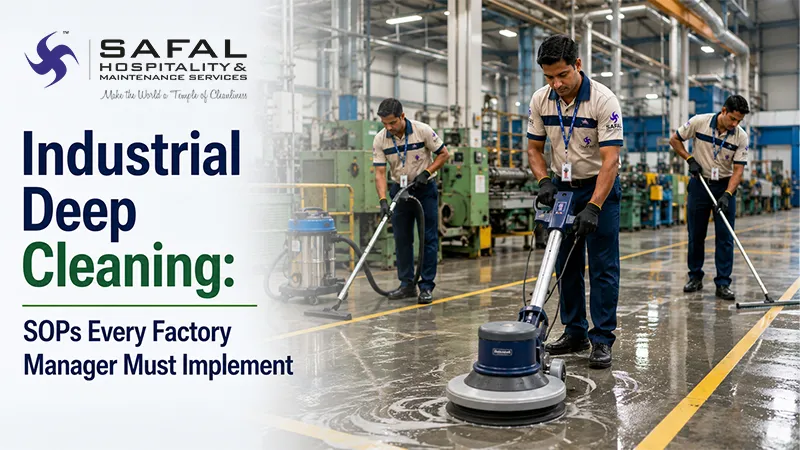
Routine cleaning keeps a factory looking acceptable. Deep cleaning keeps it operating safely. Embedded grease, fine dust on overhead structures, residue inside machine cavities, and biofilm in drains compromise both worker safety and equipment reliability. The right SOPs convert deep cleaning from an annual emergency into a planned, audit-friendly program.
Key Takeaways
- Different zones need different frequencies - one-size cleaning fails audits.
- Match chemistry to soil; wrong dilution wastes money and risks safety.
- PPE and LOTO are non-negotiable around machinery.
- ATP swab testing is the gold standard for food-grade verification.
- Audit-ready documentation is half the value of deep cleaning.
Frequency Standards by Zone
- Production floors: deep clean monthly, between batch changeovers
- Overhead structures, cable trays, ducts: quarterly
- Pantry, cafeteria, food handling: weekly deep clean, daily sanitization
- Washrooms, locker rooms: weekly deep, hourly checks
- External façade, parking, drains: half-yearly
- Water tanks, STP/ETP: half-yearly with chlorination certificates
Methods & Equipment
- High-pressure jet washing: 100-200 bar for hardened residue, courtyards, drains
- Mechanized scrubbing: walk-behind or ride-on for floors
- Steam cleaning: 140°C+ for food-contact surfaces and chemical-free sanitization
- Chemical degreasing: alkaline degreasers for kitchen exhausts and machinery
- HEPA vacuuming: overhead structures to prevent dust dispersal
Chemical Selection
Match chemistry to soil. Acidic descalers for mineral deposits. Alkaline degreasers for fats and oils. Quaternary disinfectants for general sanitization. Hospital-grade disinfectants for high-risk zones. Always check MSDS, dilution ratios, and contact times - using a 1:5 chemical at 1:50 wastes money and skips disinfection.
Plan a deep cleaning program for your factory
Get a customised SOP and frequency plan.
PPE & Safety Protocols
- Chemical-resistant gloves, splash goggles, aprons for caustic work
- Respiratory protection during dust-generating tasks
- Lockout-tagout (LOTO) for cleaning around machinery
- Confined space entry permits for tank and silo cleaning
- Wet-floor signage and barricading during operations
Documentation for Audits
HACCP, ISO 22000, OSHA, and customer audits all require evidence of cleaning. Maintain: cleaning schedule master, daily/weekly checklists with signatures, chemical inventory and MSDS, ATP test results for food-contact surfaces, before/after photos for major deep cleans.
Frequently Asked Questions
Monthly for most factories, ideally between batch changeovers. Food and pharma facilities may run weekly or shift-based deep cleaning depending on product risk.
Steam cleaning is great for surfaces and food-contact zones. Around sensitive electronics, use HEPA vacuuming and dry methods - or isolate the equipment under LOTO before cleaning.
ATP (adenosine triphosphate) swabs measure microbial residue on cleaned surfaces. Lower readings indicate cleaner surfaces. It's the gold standard for verifying food-grade and pharma cleaning.
Major deep cleans (jet washing, steam, chemical degreasing) need shutdown windows. Lighter zone-by-zone deep cleaning can be sequenced during low-output shifts with proper LOTO.
Cleaning master schedule, signed daily/weekly checklists, chemical MSDS and inventory, ATP/swab logs, applicator training records, and a 12-month trend showing the program is consistent.